The year 2026 has arrived — and with it, a tidal wave of AI-driven transformation that is reshaping how brands create, distribute, and optimise their content. For marketers who have embraced AI tools, the results are nothing short of extraordinary. For those still on the fence, the competitive gap is widening by the day. In this article, we explore the ten most significant ways artificial intelligence is rewriting the rules of content marketing.
1. AI-Powered Content Generation at Scale
Perhaps the most visible shift in 2026 is the sheer volume of high-quality content that AI enables. What once required a team of ten writers for a month can now be produced in hours. Platforms like ContentOrbit AI use large language models fine-tuned on billions of marketing documents to generate blog posts, product descriptions, email sequences, and landing pages that match — or exceed — human quality standards.
The key word here is "scale." AI does not just help you write one piece of content faster; it allows you to build entire content ecosystems covering thousands of keyword variations, customer segments, and intent stages simultaneously. Brands that leverage this capability are seeing organic search footprints grow by 300–500% within a single quarter.
- Generate full-length articles from a keyword and brief in under two minutes
- Maintain consistent brand voice across thousands of pieces
- Cover the full keyword universe without proportional budget increases
- Localise content for dozens of markets automatically
2. Hyper-Personalised Content at the Individual Level
Personalisation in 2026 has moved far beyond inserting someone's first name into an email. AI systems now analyse behavioural signals, purchase history, browsing patterns, and demographic data to generate entirely unique content experiences for individual users in real time.
Dynamic landing pages, personalised email bodies, and custom product recommendation copy are all being generated on-the-fly by AI engines connected to CRM data. The result is conversion rate improvements of 40–80% over static, one-size-fits-all approaches.
"AI does not just help you write one piece of content faster — it allows you to build entire content ecosystems covering thousands of keyword variations, customer segments, and intent stages simultaneously."
3. Intelligent SEO Research and Strategy
Traditional keyword research was a slow, manual process prone to human bias and blind spots. AI-powered SEO tools now process vast amounts of search data, SERP patterns, competitor content, and user intent signals to identify content opportunities that humans would likely miss entirely.
ContentOrbit AI's SEO module, for example, clusters related keywords into topical authority maps, identifies content gaps in your competitive landscape, and recommends a prioritised content calendar based on traffic potential, difficulty, and your existing domain authority.

4. Automated Content Repurposing
Every piece of long-form content you create holds the potential for dozens of derivative assets: social media posts, email snippets, short-form videos, infographic copy, podcast scripts, and more. Manually repurposing a single blog post across all channels could take a full day's work. AI reduces this to minutes.
Modern AI platforms detect the core insights in any piece of content and automatically reformat, resize, and restyle them for every channel in your distribution mix, maintaining consistent messaging while adapting tone and format for each platform's unique audience expectations.
- Upload or paste any long-form content asset
- Select target channels (social, email, video script, etc.)
- AI generates channel-optimised variants instantly
- Review, adjust tone or emphasis as needed
- Publish directly through connected integrations
5. Real-Time Content Performance Optimisation
Static content is being replaced by living, adaptive content. AI systems now monitor how individual pieces perform — tracking dwell time, scroll depth, conversion rates, and engagement signals — and automatically recommend or implement improvements to underperforming content.
Set up ContentOrbit AI's Content Optimiser to run automated quarterly audits on your top 50 landing pages. Most teams see a 15–25% improvement in organic CTR within 30 days of implementing AI-generated meta improvements alone.
6. Conversational Content and AI-Driven FAQ Generation
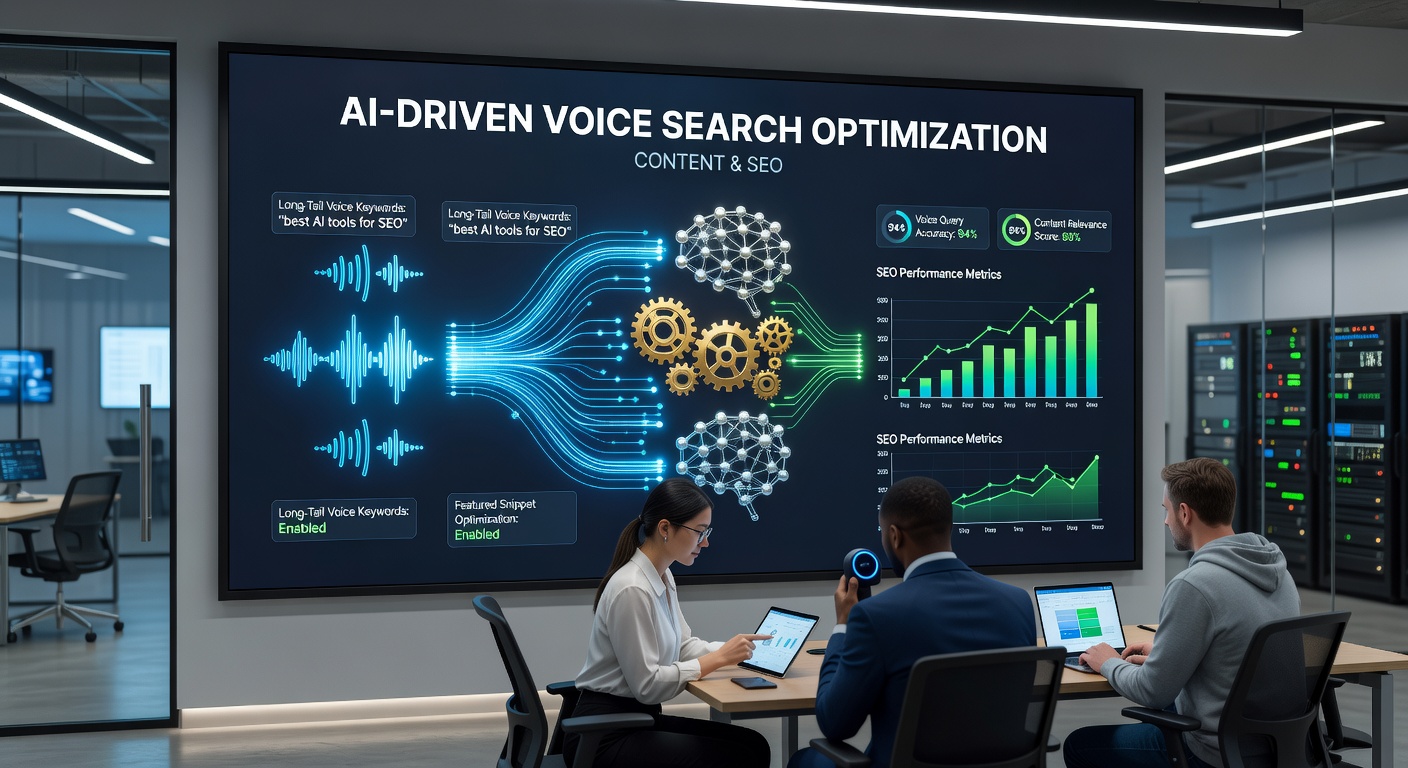
The rise of voice search, AI assistants, and conversational interfaces has fundamentally changed how people discover information online. Content that answers specific questions directly — in natural language — now performs far better than keyword-stuffed, traditional blog content.
AI tools excel at identifying the exact questions your target audience is asking — from Reddit threads to Google's "People Also Ask" data — and generating comprehensive, conversational answers that rank for featured snippets and voice results.
7. Multilingual Content Without Translation Overhead
Expanding into new geographic markets has historically required significant investment in professional translation and localisation services. In 2026, AI delivers not just literal translation, but genuine cultural localisation — adapting idioms, cultural references, and communication styles for each target market.
Brands using ContentOrbit AI's multilingual engine report being able to enter new markets three to five times faster than with traditional localisation workflows, at a fraction of the cost.
8. Predictive Content Strategy
What should you write about next? AI answers this question with data rather than gut feeling. By analysing trending topics, seasonal search patterns, competitor content calendars, and your own audience engagement history, AI systems can predict which content themes will drive the most traffic and conversions in the coming weeks and months.
This predictive capability transforms content strategy from reactive to proactive — allowing marketing teams to get ahead of trends before they peak, rather than scrambling to create content after competitors have already claimed the top rankings.
"Brands using AI-powered predictive content strategy are publishing 30% of their content before a trend peaks — compared to just 5% for teams relying on manual research."
9. Automated A/B Testing and Copy Variation
Testing headlines, CTAs, and intro paragraphs used to require significant manual effort to set up and analyse. AI now generates hundreds of meaningful content variations for any asset, automatically runs multivariate tests, and shifts traffic to winning variants — all without human intervention.
Continuous AI-driven testing means your content is always improving. Landing pages, email subject lines, and social ad copy all benefit from perpetual optimisation cycles that no human team could replicate at scale.
10. AI-Augmented Human Creativity
Perhaps the most nuanced — and ultimately most important — shift is the evolving role of the human creator. The best content marketers in 2026 are not those who have abandoned AI nor those who have surrendered entirely to automation. They are the ones who have learned to use AI as a creative amplifier.
AI handles the research, the first drafts, the structural optimisation, and the distribution logistics. Human marketers bring the strategic insight, the brand perspective, the empathy, and the creative spark that makes content genuinely compelling. Together, they consistently outperform both AI-only and human-only approaches.
- Use AI for research, outlines, and first drafts
- Apply human editing for tone, nuance, and strategic messaging
- Let AI optimise for SEO and distribution
- Reserve human creativity for big ideas and brand storytelling
Conclusion
AI is not replacing content marketing — it is supercharging it. The brands winning in 2026 are those that have embraced AI as a core part of their content operations, not as a gimmick, but as a genuine competitive advantage. The capabilities described in this article are not future projections; they are available today, inside platforms like ContentOrbit AI.
If your content team is still operating the way it did in 2023, the gap between you and your AI-enabled competitors is growing every single day. The time to act is now — and the tools to help you do it have never been more accessible, affordable, or powerful.